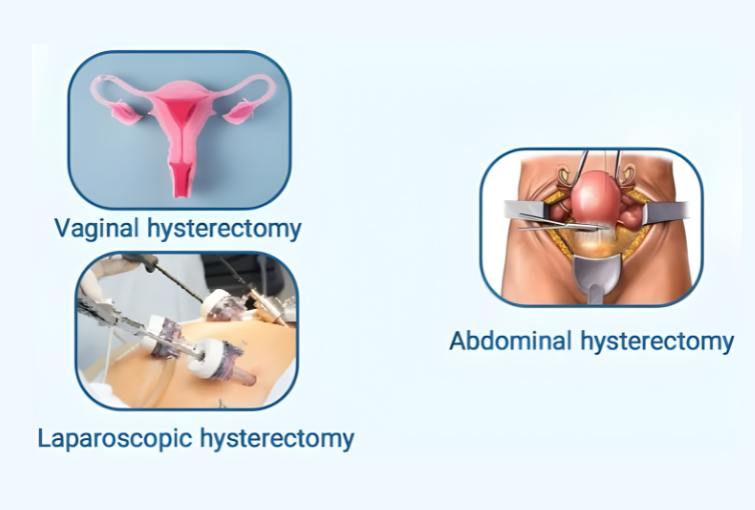
A hysterectomy is a surgical procedure to remove the uterus and is commonly performed to treat a variety of gynecological conditions when conservative treatments are no longer effective. Depending on the condition and individual needs, the procedure can be performed using different approaches, including vaginal, laparoscopic (keyhole), or open surgery.
Dr. Amit Majumdar, Consultant Obstetrician and Gynaecologist with super-specialty expertise in urogynecology, provides advanced hysterectomy procedures tailored to each patient. His approach focuses on selecting the safest and least invasive method possible while ensuring effective treatment and optimal recovery.
What is a Hysterectomy?
A hysterectomy involves the removal of the uterus. In some cases, additional structures such as the cervix, ovaries, or fallopian tubes may also be removed depending on the underlying condition.
After hysterectomy:
Types of Hysterectomy
The type of hysterectomy depends on the condition being treated.
1. Total Hysterectomy
2. Subtotal (Partial) Hysterectomy
3. Hysterectomy with Removal of Ovaries and Tubes
Surgical Approaches
Different techniques are used depending on the patient’s condition.
1. Vaginal Hysterectomy
Benefits:
2. Laparoscopic (Keyhole) Hysterectomy
Benefits:
3. Open (Abdominal) Hysterectomy
Benefits:
Why is a Hysterectomy Performed?
A hysterectomy may be recommended for conditions such as:
The decision is made after careful evaluation and discussion.
Who is an Ideal Candidate?
You may be advised hysterectomy if:
A personalized assessment helps determine the best approach.
Pre-Surgical Evaluation
Before surgery, a detailed evaluation is performed:
Patients are guided through every step to ensure clarity and confidence.
What Happens During the Procedure?
The procedure varies depending on the surgical approach.
General Steps:
The duration depends on the complexity of the case.
What to Expect After Surgery
Immediately After Surgery
Recovery Period
Common Experiences
Recovery & Aftercare
Patients are advised to:
Recovery plans are individualized based on the type of surgery.
Benefits of Hysterectomy
Possible Risks & Considerations
As with any surgery, there are potential risks, including:
These risks are minimized with proper surgical care and follow-up.
What Patients Can Expect
Before Surgery
During Surgery
After Surgery
Why Choose Dr. Amit Majumdar?
Patients choose Dr. Amit for:
✔ Consultant-level expertise in gynecology
✔ Super-specialty training in urogynecology
✔ Experience in minimally invasive and complex surgeries
✔ Personalized surgical approach
✔ Focus on safety, precision, and recovery
His goal is to provide effective treatment with the best possible outcomes.
When to Consider Consultation
You should consider consultation if:
Early consultation helps plan appropriate treatment.
Book Your Consultation
If you are considering hysterectomy or want expert advice, a detailed consultation can help you make an informed decision.
Schedule your consultation with Dr. Amit Majumdar for advanced surgical care and personalized treatment planning.